Home Services
Understanding Home Security Systems: A Technical and Conceptual Overview

Home security systems are integrated networks of electronic devices and software protocols designed to detect, announce, and occasionally deter unauthorized entry or environmental hazards within a residential perimeter. This article explores the fundamental architecture of these systems, the physical and digital mechanisms that drive them, and the objective considerations regarding their implementation. By the end of this overview, readers will understand how sensors interact with control units, the distinction between various monitoring models, and the current technological trends shaping the industry.
I. Foundational Concepts: Components and Connectivity
At its core, a home security system is a localized ecosystem of hardware that communicates through a central hub. Understanding the individual parts is essential to grasping the whole.
- The Control Panel (The "Brain"): This is the primary interface and processing unit. It decodes signals from peripheral sensors, manages arming/disarming states, and communicates with the outside world (via cellular, Wi-Fi, or landline).
- Sensors and Transducers: These are the "nervous system" of the setup. Common types include:Contact Sensors: Utilizing magnetic reed switches to detect when doors or windows are opened.Passive Infrared (PIR) Sensors: Detecting motion by measuring changes in thermal energy.Glass Break Detectors: Audio-based sensors tuned to the specific frequency of shattering glass.
- Environmental Sensors: These extend security beyond human intruders to include smoke detectors, carbon monoxide (CO) sensors, and water leak probes.
- User Interfaces: Keypads, key fobs, or mobile applications that allow users to interact with the system.
II. Core Mechanisms: How Security Systems Function
The efficacy of a security system relies on the seamless transition from detection to communication.
1. The Detection Loop
Most systems operate on "normally closed" or "normally open" circuits. When a door opens, the magnetic circuit is broken, triggering a signal to the control panel. Modern wireless systems use encrypted radio frequencies (RF) to transmit these triggers, reducing the risk of signal jamming or physical wire cutting.
2. Signal Processing and Verification
Once a sensor is triggered, the control panel evaluates the signal based on its current state (Stay, Away, or Disarmed). To minimize false alarms—which, according to the Center for Problem-Oriented Policing, account for a significant percentage of police calls—many systems employ "alarm verification" algorithms or require a secondary sensor trigger before escalating the alert.
3. Data Transmission Paths
The method by which a system sends an alert is a critical technical variable:
- Cellular: Generally considered the most resilient, as it remains functional during power outages and cannot be physically cut like a phone line.
- IP/Broadband: High-speed data transmission through a home router; however, it is dependent on the home’s internet service and power.
- POTS (Plain Old Telephone Service): The traditional method, transmitting data via analog phone lines.
III. The Full Landscape: Professional vs. Self-Monitoring
Objective analysis of home security requires a distinction between how alerts are managed once they leave the home.
| Feature | Professional Monitoring | Self-Monitoring |
| Response Agency | Central Monitoring Station (UL-Listed) | The individual user |
| Reliability | Redundant staff available 24/7 | Dependent on user’s phone signal/availability |
| Verification | Operators may call to verify before dispatch | User must verify via cameras or sensors |
| Ongoing Costs | Monthly service fees | Often minimal or zero |
The Role of Automation
The integration of the "Internet of Things" (IoT) has blurred the lines between security and convenience. Protocols such as Zigbee, Z-Wave, and Matter allow security systems to interact with lighting, locks, and thermostats. For instance, a smoke detector trigger might automatically unlock smart doors to facilitate exit and turn on lights to improve visibility for emergency responders.
IV. Objective Discussion: Limitations and Considerations
While technology has advanced, home security systems are not infallible. Users and researchers must consider several technical and social constraints.
- False Alarms: According to a report by the Urban Institute, false alarms consume significant municipal resources. Many jurisdictions now require "verified response," meaning police will only respond if there is video or audio evidence of an intruder.
- Cybersecurity Vulnerabilities: Insecure Wi-Fi networks or unencrypted camera feeds can lead to privacy breaches.
- Signal Interference: In wireless systems, physical obstacles (like thick concrete walls) or electronic noise from other household appliances can occasionally lead to sensor "supervision errors."
V. Summary and Future Outlook
Home security has evolved from simple perimeter bells to complex, data-driven networks. The current trajectory suggests an increasing reliance on Artificial Intelligence (AI) for computer vision—allowing cameras to distinguish between a pet, a swaying tree, and a human. Furthermore, the industry is moving toward greater interoperability, where different brands of hardware can operate under a single unified protocol.
The future of residential security likely lies in "predictive" rather than "reactive" tech, using patterns of movement to identify anomalies before a breach occurs. However, the fundamental goal remains constant: providing a verifiable layer of data regarding the state of a residential environment.
VI. Q&A: Common Technical Inquiries
Q: Do home security systems work during a power outage?
A: Most professional-grade control panels include a backup battery (typically Lead-Acid or Lithium-ion) that provides 12 to 24 hours of operation. However, if the system relies on Wi-Fi for communication, the home router must also have a backup power source (UPS) to maintain external connectivity.
Q: What is a "UL-Listed" monitoring station?
A: Underwriters Laboratories (UL) is a global safety science company. A UL-Listed monitoring station has met rigorous standards for structural integrity, power redundancy, and staffing levels to ensure they can receive and process alarm signals under extreme conditions.
Q: What is the difference between "active" and "passive" security?
A: Active security refers to measures that take an action upon detection (e.g., sounding a siren or locking doors). Passive security refers to measures that record or observe without immediate intervention (e.g., standalone CCTV cameras that do not trigger alerts).
Q: Can pets trigger motion detectors?
A: Yes, however, many modern PIR sensors feature "pet immunity" settings. These are calibrated to ignore heat signatures below a certain weight threshold (commonly 40–80 lbs) or are angled to ignore movement near the floor.

Social media manager and content strategist building and executing online presence campaigns for B2B companies.
Exploration ArchivesOther Articles
 Dec 19, 2025
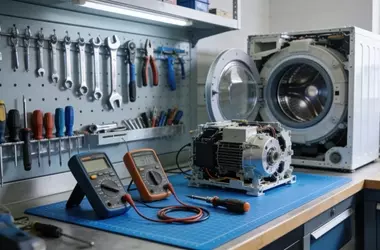
Understanding Appliance Repair Services: A Technical Overview
Appliance repair services encompass the systematic diagnosis, maintenance, and restoration of electromechanical household devices. These services bridge the gap between complex engineering and daily utility, ensuring that machines such as refrigerators, washing machines, and ovens operate within their designed parameters. This article explores the technical framework of appliance repair, moving from basic component definitions to the sophisticated diagnostic mechanisms used in modern "smart" appliances. By examining the objective processes of fault isolation and the standards governing the industry, this overview will clarify how these systems are maintained and what technical considerations define a successful repair.
 By Sarah Morning Star
 Dec 19, 2025
Residential Property Restoration: An Objective Analysis of Home Repair Domains
Home repair servicesencompass the professional or specialized activities required to restore, maintain, or improve the structural and functional integrity of a residential dwelling. These services address the inevitable physical degradation of a building’s systems—including plumbing, electrical, HVAC (Heating, Ventilation, and Air Conditioning), and structural components—caused by age, environmental exposure, or mechanical failure.
 By Fatima Al-Jamil
 Dec 19, 2025
Understanding the Bathroom Remodel: A Comprehensive Technical and Operational Overview
Abathroom remodelis the systematic process of altering the structure, utility systems, or aesthetic components of a bathroom space to improve functionality, safety, and compliance with modern building codes. Unlike minor repairs, a remodel typically involves a combination of trade disciplines, including plumbing, electrical work, tiling, and structural engineering. This article examines the fundamental phases of the remodeling process, the mechanical systems involved, and the regulatory frameworks that govern these projects, providing a technical baseline for understanding how these environments are transformed.
 By Jenny Li