

CPR & First Aid: Why this course is more than just a mandatory certificate
CPR / first-aid certification in Australia is often a job or regulatory requirement rather than an optional goodwill gesture. Education and childcare staff, many construction and trade workers, licensed electricians (in some states), and health and aged-care workers are among the groups required, or strongly expected, to hold specific nationally-recognised units of competency. This need comes from workplace health-and-safety rules, education-sector regulations and state licencing conditions — in short, the demand is driven by practical compliance, not theory.
Why this matters
Employers are required to provide access to trained first-aiders and appropriate kits; regulators for education, childcare and certain licences set course requirements; and some state rules now bind licencing holders to periodic CPR training. Those layers create a steady, institution-level demand for certified training.
Who needs it
| Target group | Why a certificate is required | Representative figure / scale |
|---|---|---|
| Education & childcare staff | National regulations require approved first-aid, anaphylaxis & asthma training (HLTAID012 or equivalent). | Early childhood sector serving ~340,000 preschool enrolments — large workforce implied. |
| Construction & trade workers | Workplace first-aid arrangements and recommended first-aider ratios apply; HLTAID011 commonly used for workplace first aid. | Construction employment ~1.29 million (2023–24) — sizable tradie workforce. |
| Licensed electricians (state example) | Some states now require periodic CPR training for licence maintenance (e.g., WA: CPR within 3 years). | Western Australia introduced mandatory CPR intervals for licensed electricians (effective Oct 2024). |
| Health & aged-care workers | Industry standards expect HLTAID009 (CPR) and HLTAID010 (basic life support) in many care settings. | National aged-care workforce surveys and reporting capture large, growing care workforce. |
| Volunteers / sport / community roles | Specific certifications often required by clubs, centres and assessment bodies. | Thousands of community roles reference first-aid/CPR as part of safe operations |
How these rules create real, recurring demand
Three mechanisms turn a unit of training into ongoing need: (1) regulatory gatekeeping — certificates required for permission to work or to meet service standards (education, aged care); (2) workplace safety rules — businesses must maintain trained staff and equipment; (3) licence or professional conditions — periodic recertification in some trades. Each mechanism means employers or workers must organise training on a continuing basis.
What’s in the common national units
- HLTAID009 — Provide CPR: core CPR skills and AED familiarity.
- HLTAID010 — Provide basic emergency life support: broader life-support basics alongside CPR.
- HLTAID011 — Provide First Aid: the standard workplace first-aider qualification used across many industries.
- HLTAID012 — Provide First Aid in an Education and Care Setting: tailored for education and childcare environments (includes asthma & anaphylaxis care).
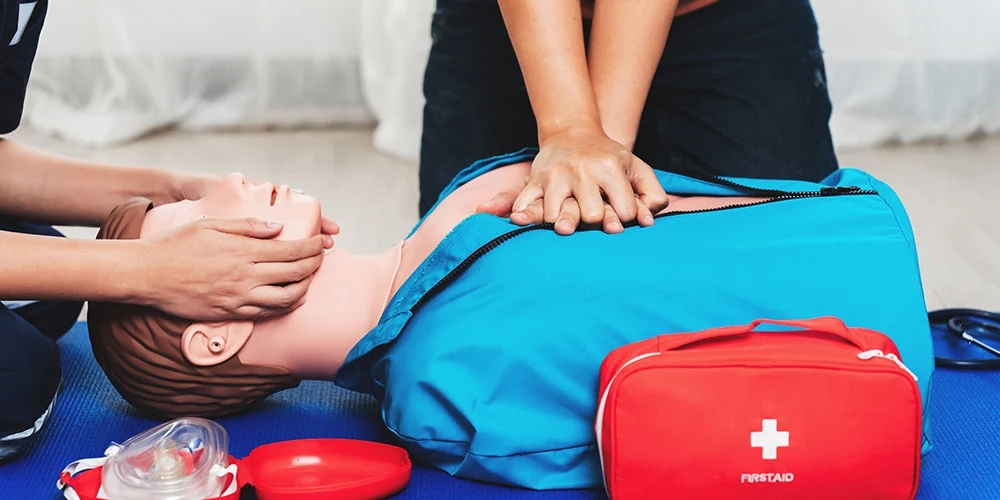
All these units combine short theory checks with hands-on practice (notably practical CPR on manikins), then issue nationally recognised statements of attainment.
Where training is available
Providers include major first-aid organisations and a wide network of Registered Training Organisations (RTOs): Australian Red Cross, St John Ambulance branches, state ambulance services, community RTOs and many private trainers. Courses are scheduled frequently and can be accessed as single-day classroom sessions or blended formats depending on the unit.
Practical notes — how to approach certification
- Identify which unit is needed for the role (e.g., HLTAID012 for childcare; HLTAID011 for workplace first aid; HLTAID009/010 for health/aged care).
- Book with an accredited RTO or established first-aid body that issues nationally recognised statements of attainment.
- Expect practical skills assessment (CPR practice on manikins) and receive the official statement of attainment on completion.
Conclusion
CPR / first-aid certification in Australia is frequently tied to work, licencing and sector rules. Those regulatory links produce consistent training demand across education, construction, aged care and trade sectors. For anyone responsible for compliance, safety or service delivery, organising the right unit of competency is a practical, recurring task — and the structure of nationally recognised units makes matching a role to the correct certificate straightforward.
Sources
- https://ecawa.org.au/news-insights/new-cpr-training-requirements-for-licensed-electricians?
- https://www.gen-agedcaredata.gov.au/resources/publications/2024/august/2023-aged-care-provider-workforce-survey?
- https://www.abs.gov.au/articles/nuts-and-bolts-australian-construction-industry?
- https://www.abs.gov.au/statistics/people/education/preschool-education/latest-release?
- https://firstaid.redcross.org.au/provide-an-emergency-first-aid-response-in-an-education-care-setting-blended/?
- https://corrsafe.com.au/hltaid011-provide-first-aid-3/?
- https://firstaid.redcross.org.au/provide-basic-emergency-life-support/?
- https://training.gov.au/training/details/hltaid009/unitdetails?
- https://www.wa.gov.au/government/announcements/new-cpr-training-requirements-licensed-electricians?
- https://www.acecqa.gov.au/qualifications-0/qualification-requirements/first-aid-qualifications-training?
Related Articles
Physical Therapy Assistant Courses: Your Path to a Rewarding Healthcare Career in the U.S.
May 21, 2025 at 9:54 AM
Can You Really Get Your CNA Certification Online? Here’s the Truth
Jul 23, 2025 at 3:33 AM
Crush the PTE: Your Fast-Track to English Fluency & Global Success
Jul 17, 2025 at 3:15 AM
PSW Course: An Overview
Jan 7, 2025 at 6:55 AM
GCSE Exam Guide: Importance and Grading
Oct 15, 2025 at 3:29 AM
Certified Nursing Assistant (CNA) Courses: A General Overview
May 12, 2025 at 8:27 AM
Nursing Courses with Certificate: An Overview
Feb 25, 2025 at 3:21 AM
CDL Training Course: A Practical Overview
May 23, 2025 at 8:20 AM
Career Outlook for Pilot Training Course: Pay, Prospects, and Practical Value
Dec 2, 2025 at 7:09 AM
From Zero to Nursing Hero: Online Nursing assistant Courses
Jul 18, 2025 at 5:54 AM


This website only serves as an information collection platform and does not provide related services. All content provided on the website comes from third-party public sources.Always seek the advice of a qualified professional in relation to any specific problem or issue. The information provided on this site is provided "as it is" without warranty of any kind, either express or implied, including but not limited to the implied warranties of merchantability, fitness for a particular purpose, or non-infringement. The owners and operators of this site are not liable for any damages whatsoever arising out of or in connection with the use of this site or the information contained herein.