Enterprise Services
An Overview of Self-Storage Services: Concepts, Mechanics, and Industry Landscape

The purpose of this article is to provide a comprehensive and neutral examination of self-storage services. This industry, which bridges real estate and logistics, offers specialized facilities for individuals and businesses to secure space for their tangible assets. By the end of this overview, the reader will understand the fundamental definition of self-storage, the operational mechanics of the industry, the various categories of available services, and the objective factors influencing the market today.
I. Foundational Concepts and Definitions
Self-storage, short for "self-service storage," is a service industry where public or private storage providers (operators) lease space—typically referred to as "units," "lockers," or "containers"—to tenants on a short-term or long-term basis. Unlike traditional warehousing, where a warehouseman has "care, custody, and control" of the goods, in self-storage, the tenant generally retains responsibility for the items stored within the secured space.
The core characteristics of self-storage include:
- Exclusive Access: Tenants usually hold the only key or access code to their specific unit.
- Scalability: Facilities offer a range of sizes, from small lockers (e.g., $5 \times 5$ feet) to large garage-sized spaces.
- Flexibility: Agreements are frequently structured as month-to-month leases rather than fixed long-term commercial contracts.
II. Core Mechanics and In-Depth Operational Analysis
The functioning of a self-storage facility involves several integrated systems designed to manage physical space and ensure security.
1. Facility Infrastructure and Types
Facilities are generally categorized into two primary physical formats:
- Drive-up Access: Units located on the ground level of a facility, allowing vehicles to park directly in front of the unit door for easy loading.
- Indoor/Climate-Controlled: Units located within a multi-story building. These units often feature climate control systems to maintain temperature and humidity within specific ranges.
2. Security and Access Protocols
Security is a fundamental component of the service model. Standard industry practices include:
- Perimeter Fencing: Physical barriers surrounding the facility.
- Electronic Gate Access: Personalized PIN codes or mobile apps that track who enters and exits the facility.
- Surveillance: High-definition CCTV systems monitoring hallways and entry points.
- Individual Alarms: Some advanced facilities equip each unit door with a sensor that alerts management if unauthorized entry occurs.
3. Lease Agreements and Legal Frameworks
The relationship between the operator and the tenant is governed by a rental agreement. Key legal aspects often include:
- Lien Laws: In many jurisdictions (such as the United States), self-storage operators have a statutory lien on the contents of the unit if the tenant fails to pay rent, allowing the operator to eventually auction the items to recoup losses.
- Prohibited Items: Standard contracts prohibit the storage of hazardous materials, perishables, living organisms.
III. Presenting the Industry Landscape: An Objective Discussion
The self-storage industry is a significant segment of the global real estate market.
- Automation: Many modern facilities are moving toward "unmanned" operations, utilizing kiosks and remote monitoring instead of on-site staff.
- Sustainability: Large-scale operators are increasingly installing solar panels on the expansive roof surfaces of storage buildings to offset energy costs for climate control.
IV. Summary and Future Outlook
The self-storage sector has evolved from simple "shed-style" buildings into sophisticated, tech-enabled real estate assets. As urban density increases and housing footprints in major metropolitan areas shrink, the demand for off-site storage solutions continues to stabilize.
Looking forward, the industry is expected to integrate further with e-commerce logistics. Many small businesses now use self-storage units as "micro-warehousing" hubs to manage last-mile delivery. The continued integration of IoT (Internet of Things) devices for real-time monitoring of unit conditions and automated access will likely define the next generation of service delivery.
V. Question and Answer (Q&A)
Q: How is the price of a self-storage unit typically determined?
A: Pricing is influenced by several variables: geographic location (urban vs. rural), the size of the unit, the floor level (ground floor is often more expensive), and whether the unit offers climate control.
Q: Does the storage facility provide insurance for stored items?
A: Generally, the facility operator does not insure the tenant's personal property. Tenants are usually required to provide proof of their own insurance or purchase a third-party protection plan offered through the facility.
Q: What is the difference between "Climate Controlled" and "Heated" units?
A: "Heated" units only prevent freezing during winter months. "Climate Controlled" units typically manage both temperature (maintaining it between $$55^{\circ}$$ and $80^{\circ}F$) and humidity levels to prevent mold and material degradation.
Q: Are there restrictions on how long a tenant can stay?
A: Most facilities operate on a "periodic tenancy" basis (usually 30 days), which automatically renews as long as rent is paid. There is typically no maximum duration, provided the terms of the lease are met.

Henna artist creating intricate bridal and festival designs, and teaching the art of natural mehndi application.
Exploration ArchivesOther Articles
 Dec 22, 2025
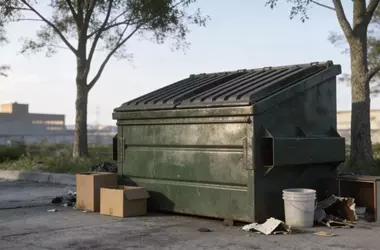
A Comprehensive Overview of Dumpster Rental Systems and Operations
The management of large-scale waste generated from construction, renovation, and commercial activities often necessitates specialized equipment beyond standard municipal curbside collection.Dumpster rentalrefers to the service of providing temporary, heavy-duty waste containers to individuals or businesses for a specific duration, followed by professional hauling and disposal. This article aims to examine the technical specifications, logistical frameworks, and regulatory environments surrounding the dumpster rental industry, addressing how these systems function, the variety of equipment used, and the environmental protocols governing waste disposal.
 By Ciara Lovelace
 Dec 22, 2025
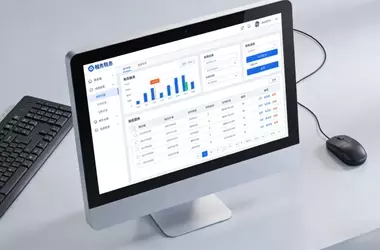
The Digital Evolution of Taxation: A Comprehensive Overview of Online Tax Systems
This article provides a neutral, technical examination ofTax Online—the digitized infrastructure and procedural framework used by governments and taxpayers to manage fiscal obligations via the internet. It defines the core components of electronic tax administration, explores the underlying mechanisms of data transmission and security, and discusses the global landscape of digital compliance. By the end of this overview, readers will understand how these systems function, the technological requirements for operation, and the objective challenges inherent in transitioning from paper-based to digital tax environments.
 By Jalen Maestro Cart
 Dec 22, 2025
Understanding the Role and Function of Financial Advisors: A Comprehensive Overview
The purpose of this article is to provide an objective, educational analysis of the financial advisory profession. It defines the core role of a financial advisor, explores the mechanisms through which they operate, and outlines the regulatory and ethical frameworks governing the industry. By the end of this text, readers will understand the distinctions between different types of advisors, how compensation models function, and the standard processes involved in professional financial planning.
 By Tariq Al-Mansoori