Beauty Services
Hair Loss Treatment: A Technical and Biological Analysis of Follicular Maintenance

Hair loss treatment refers to a broad spectrum of medical, pharmacological, and surgical interventions aimed at slowing, halting, or reversing the thinning and shedding of hair. While hair loss (alopecia) can result from autoimmune conditions, nutritional deficiencies, or trauma, the most common variant is Androgenetic Alopecia (AGA), which is driven by genetic predispositions and hormonal activity. Modern treatments primarily target the biological lifecycle of the hair follicle to extend the growth phase or stimulate dormant structures.
This article provides a neutral, science-based analysis of the hair loss treatment landscape. It explores the foundational physiology of the hair growth cycle, the biochemical mechanisms of FDA-approved pharmacological agents, and the objective standing of the industry as of late 2025. The following sections will detail the cellular roles of 5-alpha reductase inhibitors, the mechanical principles of laser therapy, and an evidence-based discussion of clinical success rates and long-term safety considerations.
1. Fundamental Concept Analysis
To analyze hair loss treatments objectively, one must first define the biological context of the Hair Growth Cycle.
The Follicular Lifecycle
Human hair follicles operate in a continuous loop of three primary phases:
- Anagen (Growth Phase): The active period where cells in the hair bulb divide rapidly. This phase typically lasts 2 to 7 years.
- Catagen (Transition Phase): A brief period (2-3 weeks) where the hair follicle shrinks and detaches from the dermal papilla.
- Telogen (Resting Phase): The phase where the hair remains dormant for about 3 months before eventually shedding (Exogen) to make room for new growth.
Shutterstock
Core Classifications
Treatment modalities in 2025 are classified by their primary method of intervention:
- Pharmaceuticals: Chemical agents that alter hormonal pathways or stimulate cellular metabolism.
- Regenerative Therapies: Procedures like Platelet-Rich Plasma (PRP) and exosome therapy that utilize growth factors to repair follicle function.
- Physical/Energy-Based: Devices utilizing Low-Level Laser Therapy (LLLT) to increase microcirculation.
- Surgical Restoration: The physical relocation of healthy follicles (often via FUE or NeoGraft) to areas of thinning (Cleveland Clinic, 2025).
2. Core Mechanisms and In-depth Elucidation
The technical functionality of modern treatments centers on two primary strategies: hormonal blockade and metabolic stimulation.
Hormonal Pathway: 5-Alpha Reductase Inhibition
The most common cause of male and female pattern baldness is Dihydrotestosterone (DHT), a derivative of testosterone.
- Mechanism: In the scalp, the enzyme 5-alpha reductase converts testosterone into DHT. DHT binds to receptors on hair follicles, causing them to miniaturize and eventually cease producing terminal hair.
- Action: Medications like Finasteride or Dutasteride inhibit this enzyme. By reducing systemic or localized DHT levels, these treatments prevent follicle miniaturization, allowing the follicle to remain in the Anagen phase longer (Patsnap Synapse, 2025).
Metabolic Pathway: Potassium Channel Opening
- Mechanism: Minoxidil, a peripheral vasodilator, is the standard for metabolic stimulation.
- Action: It acts as a potassium channel opener, which hyperpolarizes cell membranes. This leads to the widening of blood vessels and increased delivery of oxygen and nutrients to the follicle. Furthermore, Minoxidil is converted into minoxidil sulfate by sulfotransferase enzymes in the scalp, which shortens the Telogen phase and prematurely shifts follicles back into Anagen (Hims, 2025).
3. Comprehensive Overview and Objective Discussion
The hair loss treatment market is a high-growth sector of the healthcare industry, driven by demographic shifts and technological maturation.
Market Statistics and Prevalence (2025)
- Market Valuation: The global hair loss treatment market is estimated to be valued at USD 4.78 billion in 2025, with projections reaching USD 7.28 billion by 2032 (Coherent Market Insights, 2025).
- Clinical Efficacy: Recent Phase 3 trials for new topical androgen receptor inhibitors, such as Clascoterone 5%, have demonstrated significant hair growth improvement with negligible systemic exposure, providing an alternative to traditional oral medications (Dermatology Times, 2025).
- Demographic Trends: Approximately 80 million individuals in the U.S. alone experience hereditary hair loss, with more than 40% of women worldwide reporting hair thinning by age 40 (Straits Research, 2025).
Objective Analysis of Limitations and Risks
Despite high success rates, clinical hair loss treatments involve documented considerations:
- Systemic Side Effects: 5-alpha reductase inhibitors (Finasteride) are associated with rare but significant side effects in approximately 2% of users, including decreased libido and mood changes. In May 2025, European regulators confirmed suicidal thoughts as a potential side effect, leading to updated warnings (ScienceAlert, 2025).
- Dependency: All non-surgical treatments require continuous application. If the treatment is discontinued, the DHT-driven miniaturization process resumes, typically resulting in the loss of regrown hair within 6 to 12 months (Wikipedia, 2025).
4. Summary and Outlook
Hair loss treatment has transitioned from purely cosmetic applications to a sophisticated field of regenerative medicine. The focus for late 2025 and 2026 is the stabilization of JAK inhibitors (such as baricitinib and ritlecitinib) for severe alopecia areata and the refinement of exosome therapy to signal follicle repair without surgery ().
Looking forward to 2026, AI-integrated robotic transplants and hair cloning research hold potential to provide more permanent solutions for those with advanced loss. The objective outlook remains centered on the shift from "mass-market" solutions to personalized genomic profiling, ensuring that treatments are matched to a patient's specific hormonal and enzyme activity levels ().
5. Questions and Answers (Q&A)
Q: Can hair loss be permanently "cured" with medication?
A: No. Currently, pharmacological treatments manage the symptoms of androgenetic alopecia. Because the underlying genetic predisposition remains, treatment must be ongoing to maintain results.
Q: Is Platelet-Rich Plasma (PRP) effective for everyone?
A: PRP efficacy varies based on the individual's platelet concentration and the stage of hair loss. It is generally found to be most effective for patients in the early stages of thinning rather than those with advanced baldness where follicles may already be inactive.
Q: Does wearing a hat cause hair loss?
A: There is no clinical evidence suggesting that wearing hats causes hair loss unless the hat is excessively tight, leading to traction alopecia—a mechanical form of hair loss caused by constant tension on the hair roots.
Data Sources for Further Reference:
- Coherent Market Insights: Hair Loss Treatment Market 2025
- Dermatology Times: Phase 3 Hair Growth Results
- FDA: Warnings on Topical Finasteride Side Effects
Summary Title: The Biological Mechanics and Clinical Landscape of Global Hair Restoration Modalities (1990–2025).
This provides a clinical ranking of the most common medications used for hair regrowth and their comparative mechanisms in 2025.

Celebrity hairstylist and natural hair care specialist, championing healthy textures and protective styles.
Exploration ArchivesOther Articles
 Dec 25, 2025
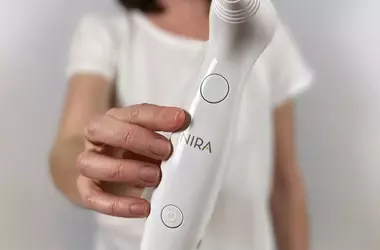
NIRA Skincare Laser: A Technical and Physiological Analysis of At-Home Non-Fractional Laser
TheNIRA Skincare Laserrefers to a class of FDA-cleared, medical-grade diode laser devices designed for at-home cosmetic use. Unlike traditional clinical lasers that often utilize "fractional" or "ablative" methods to resurface the skin by creating microscopic wounds, NIRA utilizes a patentednon-fractional, non-ablativeapproach. Its primary objective is to stimulate natural collagen production by delivering controlled thermal energy to the dermal layers without damaging the protective outer layer of the skin (epidermis).
 By Eleanor Ellie Gree
 Dec 25, 2025
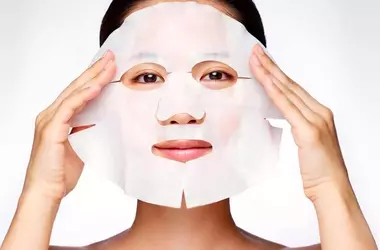
Face Care: A Technical and Biological Analysis of Dermal Health and Maintenance
Face careis a multi-disciplinary practice situated at the intersection of dermatology and cosmetology, focused on preserving the structural integrity, biological function, and aesthetic quality of the facial skin. The facial epidermis is distinct from the rest of the body due to its higher density of sebaceous glands and constant exposure to environmental stressors such as ultraviolet (UV) radiation and pollutants. Consequently, face care involves a systematic application of cleansing, hydration, and protection protocols tailored to specific skin phenotypes.
 By Enrique Vega
 Dec 25, 2025
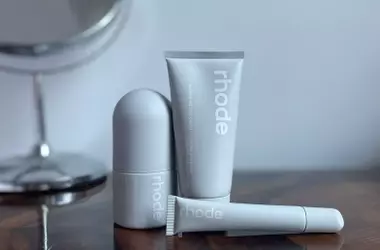
Rhode Skincare: A Technical and Business Analysis of Barrier-Centric Beauty
Rhode Skincare, legally known asRhode, is a contemporary skincare and hybrid makeup brand characterized by a minimalist, "barrier-first" philosophy. Established in June 2022 by Hailey Rhode Bieber, the brand gained significant industrial attention for its curated product range, which focuses on skin hydration and the structural integrity of the skin barrier. Within three years of its inception, the brand transitioned from a direct-to-consumer (DTC) startup to a major market player, culminating in a reported acquisition bye.l.f. Beautyin May 2025.
 By Richard Banks