Beauty Services
The Biological and Clinical Framework of Laser Hair Removal for Dark Skin: A Technical Review (2025)

The term laser hair removal for dark skin refers to a category of light-based dermatological procedures specifically engineered to navigate the unique optical properties of melanin-rich skin (Fitzpatrick Scales IV–VI). In the early stages of aesthetic laser development, the primary challenge was the lack of "chromophore selectivity"—lasers often failed to distinguish between the melanin in the hair follicle and the melanin in the surrounding epidermis, leading to thermal injury. By 2025, the clinical standard has shifted toward long-pulse technologies that bypass the surface pigment to target the hair root directly.
This article provides a neutral, scientific examination of the mechanisms, safety protocols, and market performance of these treatments. It explores the physics of selective photothermolysis, analyzes the comparative efficacy of various laser wavelengths, and presents an objective overview of clinical risks and industry trends. The discourse is structured to define technical goals, explain core biochemical mechanisms, present an impartial view of industrial impact, and conclude with a factual Q&A session.
1. Explicit Goals and Basic Concept Analysis
The primary objective of laser hair removal for dark skin is the permanent reduction of hair density without compromising the structural integrity of the pigmented epidermis.
1.1 The Target: Melanin and the Hair Follicle
The target in all laser hair removal is melanin, the pigment that gives hair its color. In darker skin tones, the high concentration of epidermal melanin acts as a competing chromophore. Therefore, the "goal" of a specialized treatment is to deliver energy at a depth and wavelength that the skin absorbs minimally while the follicle absorbs maximally.
1.2 The Fitzpatrick Skin Scale
Clinical settings utilize the Fitzpatrick Skin Scale to categorize skin types and determine laser parameters:
- Type IV: Mediterranean or olive skin; tans easily, rarely burns.
- Type V: Brown skin; tans easily, rarely burns.
- Type VI: Deeply pigmented dark brown to black skin; never burns.
2. Core Mechanisms: Selective Photothermolysis and Wavelengths
The efficacy of modern protocols is rooted in the physics of Selective Photothermolysis, which involves using a specific pulse duration and wavelength to damage a target while sparing surrounding tissue.
2.1 The Nd:YAG Laser ($1064 \text{ nm}$)
The Nd:YAG (Neodymium-doped Yttrium Aluminum Garnet) is considered the "gold standard" for skin types IV–VI as of 2025.
- Mechanism: It operates at a long wavelength of $1064 \text{ nm}$. Because this wavelength is less readily absorbed by melanin compared to shorter wavelengths, the energy passes safely through the dark epidermis to reach the deep-seated hair bulb.
- Thermal Impact: It targets the blood supply (hemoglobin) at the base of the follicle as a secondary chromophore, effectively disabling growth without overheating the surface skin (Urbana, 2025).
2.2 Diode Lasers ($810 \text{ nm}$) and SHR Technology
Diode lasers are versatile but require advanced cooling for darker tones.
- Mechanism: Diode systems often utilize SHR (Super Hair Removal) technology, which delivers low-fluence (energy) pulses at a high repetition rate.
- Impact: Instead of a single high-energy blast, the follicle is heated gradually. This "in-motion" technique allows the epidermis to remain cool while the hair root reaches the required temperature for destruction (ALMA, 2025).
3. Holistic View: Industry Statistics and Objective Discussion
The global market for laser hair removal has seen significant expansion in the "diverse skin tone" segment due to technological democratization.
3.1 Market Data and Growth
According to Precedence Research (2025):
- The global laser hair removal market is valued at approximately USD 1.58 billion in 2025.
- It is projected to reach USD 7.17 billion by 2034, growing at a CAGR of 18.35%.
- The Nd:YAG segment is experiencing a specialized growth rate of 20.14% due to increasing demand in Asian and African markets (Precedence Research, 2025).
3.2 Clinical Safety and Side Effect Profiles
Success rates are high, but the "safety margin" for dark skin is narrower than for light skin.
| Wavelength | Suitability (Fitzpatrick) | Primary Risk | Effectiveness |
| Alexandrite ($755 \text{ nm}$) | Types I–III | High risk of burns on dark skin | High |
| Diode ($810 \text{ nm}$) | Types I–IV (V with cooling) | Potential for hyperpigmentation | High |
| Nd:YAG ($1064 \text{ nm}$) | Types IV–VI | Temporary redness/swelling | Moderate-High |
Source: 2025 Clinical Meta-Analyses (GlowUp, 2025).
Adverse Effects: Even with modern technology, dark skin types may experience Post-Inflammatory Hyperpigmentation (PIH) or temporary Hypopigmentation (lightening of the skin) if settings are improperly calibrated.
4. Summary and Outlook: Inclusive Technology
The trajectory of laser hair removal is moving toward "intelligent" systems that minimize human error.
Projected Trends (2026–2030):
- Melanin Readers: Systems equipped with "skintel" meters that measure the exact melanin index of the patient’s skin before firing, automatically adjusting the laser fluence.
- Home-Use Constraints: While professional devices have become safer, most home-use IPL (Intense Pulsed Light) devices remain contraindicated for dark skin due to their broad-spectrum light, which cannot distinguish between hair and skin (ASPS, 2025).
- Advanced Cooling: Integration of cryo-sprays and sapphire cooling tips that keep the skin at $5^\circ\text{C}$ throughout the pulse duration.
5. Question and Answer Session (Q&A)
Q: Why are more sessions often required for dark skin?
A: To ensure safety, practitioners often use lower "fluence" (energy) levels and longer pulse durations for darker skin. While this protects the skin, it may take more sessions (typically 8–12) to achieve the same level of follicle destruction as a single high-energy pass on light skin.
Q: Can laser treatment help with razor bumps (pseudofolliculitis barbae)?
A: Yes. Laser hair removal is considered a primary clinical treatment for razor bumps, which are common in curly or coarse hair. By eliminating the hair at the root, it prevents the hair from curling back into the skin and causing inflammation (Ideal Image, 2025).
Q: Is "painless" laser hair removal a reality for dark skin?
A: Most patients describe the sensation as a "rubber band snap." "Painless" is often a marketing term for SHR technology, which involves a lower intensity but high repetition that some find significantly more comfortable.
Q: What is the most critical post-treatment care?
A: Strict sun protection is essential. Because the laser creates temporary inflammation, exposure to UV rays can trigger the skin to produce excess melanin, leading to dark spots. Using SPF 50+ for at least two weeks post-treatment is a standard clinical requirement (Medical Physics Institute, 2025).
Article Summary Title:
The Physics of Inclusivity: A Technical Review of Laser Hair Removal for Melanin-Rich Skin (2020–2025)
(包容性的物理学:针对富含黑色素皮肤的激光脱毛技术综述 2020-2025)
Would you like me to analyze the specific comparative data regarding the pulse width settings used for Fitzpatrick Type VI skin in 2025 clinical trials?

Retired teacher offering in-home tutoring for K-8 students in math, reading, and study skills.
Exploration ArchivesOther Articles
 Dec 23, 2025
The Biological and Industrial Framework of Turkish Rhinoplasty: A Technical Review (2025)
The termTurkish rhinoplastyrefers to a specialized set of surgical protocols and clinical paradigms for nasal reshaping performed within the healthcare infrastructure of Turkey. While "rhinoplasty" is the universal medical term for the surgical modification of the nose, the "Turkish" prefix has become a distinct descriptor in late 2025 due to the country’s concentrated adoption ofpreservation-first philosophiesandultrasonic (piezo) technologies. These procedures address both aesthetic refinement—such as dorsal hump reduction and tip definition—and functional airway corrections, including septoplasty.
 By Richard Banks
 Dec 23, 2025
The Biological and Clinical Framework of Rhinoplasty Consultations: A Technical Review (2025)
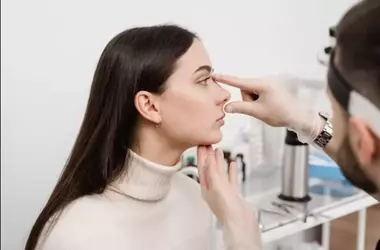
The termnose job consultation, clinically referred to as arhinoplasty consultation, defines the essential diagnostic and planning phase preceding surgical or non-surgical nasal alteration. It is a formal clinical meeting between a patient and a board-certified surgeon intended to evaluate the anatomical viability of the procedure, assess functional airway integrity, and align patient expectations with physiological possibilities. As of late 2025, the consultation has evolved into a high-technology assessment involving 3D morphing and AI-assisted nasal analysis.
 By Brandon Ellis
 Dec 23, 2025
The Biological and Clinical Framework of Flat Stomach Surgery: A Technical Review (2025)
The termflat stomach surgeryprimarily refers to a group of surgical procedures known asabdominoplasty(commonly called a "tummy tuck") andliposuction, designed to structurally alter the midsection. While often perceived as a cosmetic change, these surgeries involve significant anatomical reorganization, including the removal of excess skin, the excision of subcutaneous adipose tissue (fat), and the repair of the abdominal wall. In the current medical landscape of late 2025, these procedures are defined by their ability to correct physical irregularities such asdiastasis recti(muscle separation) orpanniculus(an apron of skin) resulting from significant weight loss or pregnancy.
 By Luna the Clown (Maria Gutierrez)