Enterprise Services
Artificial Intelligence Tools: An Analytical Perspective on Modern Computational Models

I. Definition and Scope
Artificial Intelligence (AI) Tools are specialized software applications or platforms that leverage machine learning algorithms, neural networks, and data processing capabilities to perform tasks traditionally requiring human intelligence. These tasks include, but are not limited to, pattern recognition, natural language understanding, logical reasoning, and predictive analytics. Unlike general-purpose software that follows rigid, rule-based instructions, AI tools are designed to identify statistical correlations within large datasets and improve their performance based on the inputs they receive.
This article aims to provide a neutral, comprehensive exploration of how these tools function, the architectural frameworks that support them, and the current landscape of their application across various industries.
II. Fundamental Concepts and Categorization
To understand AI tools, one must first distinguish between the various sub-fields that power them. The effectiveness of any AI tool is predicated on its underlying model and the quality of the data it processes.
1. Machine Learning (ML) Tools
Machine learning is the backbone of most contemporary AI applications. These tools use statistical techniques to enable computers to "learn" from data. They are generally categorized as:
- Supervised Learning: Tools trained on labeled datasets.
- Unsupervised Learning: Tools that find hidden patterns in unlabeled data.
- Reinforcement Learning: Tools that learn through trial and error to achieve a specific goal.
2. Natural Language Processing (NLP)
NLP tools focus on the interaction between computers and human language. This includes text generation, translation, sentiment analysis, and speech-to-text conversion. These tools rely heavily on Large Language Models (LLMs).
3. Computer Vision
These tools enable systems to derive meaningful information from digital images, videos, and other visual inputs. Common functions include object detection, facial recognition, and medical image analysis.
III. Core Mechanisms and Deep Technical Insights
The functionality of AI tools is driven by complex mathematical architectures and computational processes.
Neural Network Architectures
Most modern AI tools utilize Artificial Neural Networks (ANNs), which are inspired by the biological structure of the human brain. A typical network consists of an input layer, multiple hidden layers, and an output layer.
The Training and Inference Cycle
AI tools operate in two distinct phases:
- Training: The model has vast quantities of data. Parameters (weights and biases) are adjusted to minimize the "loss function," which measures the difference between the tool's output and the correct target.
- Inference: Once trained, the tool is deployed to process new, unseen data and provide outputs based on the patterns it learned during the training phase.
IV. The Global Landscape and Objective Discussion
The deployment of AI tools has reached a global scale, impacting sectors from healthcare to finance.
Functional Applications
| Sector | Typical AI Tool Function |
| Healthcare | Diagnostic assistance and genomic sequencing. |
| Finance | Algorithmic trading detection systems. |
| Manufacturing | Predictive maintenance and supply chain optimization. |
| Education | Automated grading and adaptive learning platforms. |
Technical Challenges and Considerations
While AI tools offer high computational efficiency, they are subject to several technical limitations:
- Data Dependency: The accuracy of an AI tool is fundamentally limited by its training data. Biased or incomplete data leads to biased or inaccurate outputs.
- Interpretability: Many advanced models, particularly deep learning networks, are often described as "black boxes" because the specific reasoning behind a single output can be difficult for humans to trace.
- Computational Cost: Training large-scale models requires significant hardware resources, specifically Graphics Processing Units (GPUs) and Tensor Processing Units (TPUs).
V. Summary and Future Outlook
AI tools represent a shift in computational methodology, moving from explicit programming to statistical learning. Currently, the field is transitioning from "Narrow AI" (tools designed for specific tasks) toward more multimodal systems capable of handling text, images, and audio simultaneously.
Research is currently focused on Efficiency (reducing the power required to run models) and Robustness (ensuring tools perform reliably under adversarial conditions). As hardware continues to evolve, the integration of AI tools into edge devices (such as smartphones and IoT sensors) is expected to increase, further decentralizing data processing from the cloud.
VI. Question and Answer Session
Q: What is the difference between an AI tool and a standard algorithm?
A: A standard algorithm follows a fixed set of logic (if-then-else) provided by a programmer. An AI tool develops its own internal logic by identifying statistical patterns within data, allowing it to handle variability that a standard algorithm cannot.
Q: Do AI tools possess consciousness or understanding?
A: No. AI tools operate based on mathematical probabilities and pattern matching. They do not possess "understanding" in the human sense; they predict the most likely output based on the numerical representations of the input data.
Q: How is the performance of an AI tool measured?
A: Performance is typically measured using specific metrics depending on the task. Common metrics include Accuracy (correct predictions/total predictions), Precision, Recall, and the F1 Score, which balances precision and recall.
Q: What role does data privacy play in the use of AI tools?
A: Data privacy is a critical technical constraint. Many AI tools require large amounts of data to function, necessitating protocols like Federated Learning (where models are trained across multiple decentralized devices) or Differential Privacy to protect individual user information.

Top-producing real estate agent specializing in luxury residential properties and investment portfolios.
Exploration ArchivesOther Articles
 Dec 23, 2025
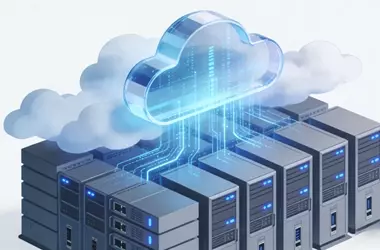
Understanding Cloud Servers: A Technical and Functional Overview
This article provides a comprehensive examination ofCloud Servers, defining their architecture, operational mechanisms, and role within modern computing environments. By the conclusion of this text, readers will understand what distinguishes a cloud server from traditional hardware, how virtualization enables their functionality, the different deployment models available, and the objective trade-offs associated with their use.
 By Deepa Sharma
 Dec 23, 2025
Understanding Human Resources Systems: A Comprehensive Overview
A Human Resources System (HRS), often referred to as a Human Resources Information System (HRIS) or Human Resources Management System (HRMS), is a digital infrastructure designed to centralize and automate the management of an organization's workforce data and personnel-related processes. This article explores the fundamental definitions, the core mechanisms that drive these systems, the diverse functional modules they encompass, and an objective analysis of their role within modern organizational structures. By the end of this overview, readers will understand how these systems operate, the data structures they rely on, and the future trajectory of workforce management technology.
 By Enrique Vega
 Dec 23, 2025
Understanding Business Credit Cards: A Comprehensive Technical Overview
Business credit cards represent a specialized segment of the financial services industry designed to facilitate corporate spending and manage enterprise liquidity. Unlike personal credit instruments, these cards are structured to accommodate the unique accounting, legal, and operational requirements of entities ranging from sole proprietorships to large corporations. This article provides a neutral, technical analysis of business credit cards, examining their structural mechanics, legal frameworks, and the functional distinctions that separate them from consumer products. We will explore how they impact credit reporting, the underwriting processes involved, and the regulatory environment governing their use.
 By Sage Mountain Flower